
Metals Advances ›› 2026, Vol. 46: 1-16.DOI: 10.1016/j.metadv.2026.02.034
• Review Article • Next Articles
Jing Tana,b, Baodong Shia,b,c,d,*( ), Xianhua Chena,b,c,*()
Received:2025-12-18
Revised:2026-01-24
Accepted:2026-01-27
Online:2026-08-10
Published:2026-02-18
Contact:
*College of Materials Science and Engineering, Chongqing University, Chongqing 400045, China. E-mail addresses: baodong.shi@ysu.edu.cn (B. Shi),xhchen@cqu.edu.cn (X. Chen).
Jing Tan, Baodong Shi, Xianhua Chen. Exploring plastic deformation behavior and underlying mechanisms of magnesium alloy: Progress in single length-scale approaches and frontiers in cross-scale linkages[J]. Metals Advances, 2026, 46: 1-16.
Add to citation manager EndNote|Ris|BibTeX
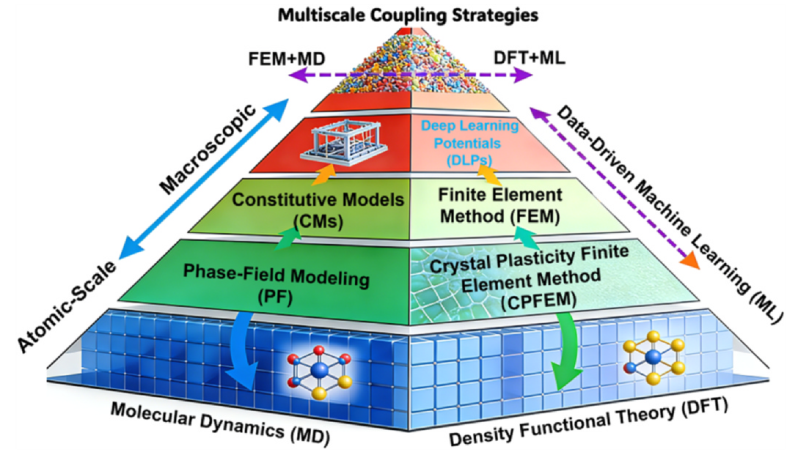
Fig. 1. A pyramid framework for visualizing multi-scale simulation strategies.
| Scale/Method | Core function | Cross-scale role | Inherent limitations | Ref. |
|---|---|---|---|---|
| Atomic scale (DFT) | Calculate fundamental energy descriptors (SFE, GSFE). | Provide input parameters (SFE, interface energies) for higher-scale models. | High computational cost; limited to ∼100-1000 atoms; cannot simulate dynamics. | [ |
| Atomic scale (MD) | Simulate the dynamic evolution of defects (dislocations, twins). | Provide kinetic data (dislocation velocities) and insights into defect-core structures. | Restricted to nanoscale and picosecond-nanosecond timescales; accuracy depends on the interatomic potential. | [ |
| Mesoscopic scale (PF) | Model microstructure evolution (grain growth, DRX, twinning). | Predict microstructural states that define initial conditions for CPFEM/FEM. | Computationally intensive for large volumes; often relies on phenomenological parameters. | [ |
| Mesoscopic scale (CPFEM) | Link crystal-scale mechanisms to polycrystalline response. | Calibrate macroscopic constitutive laws; provide sub-grid scale physics for FEM. | Prohibitively expensive for full-component simulations; requires simplification of complex defect interactions. | [ |
| Macroscopic scale (FEM/CM) | Simulate component-level forming processes and optimize parameters. | Provide boundary conditions for lower-scale models in a top-down manner. | Often lacks physical mechanisms; parameters require extensive calibration, limiting predictability. | [ |
Table 1. Cross-scale roles and inherent limitations of single-scale simulation methods.
| Scale/Method | Core function | Cross-scale role | Inherent limitations | Ref. |
|---|---|---|---|---|
| Atomic scale (DFT) | Calculate fundamental energy descriptors (SFE, GSFE). | Provide input parameters (SFE, interface energies) for higher-scale models. | High computational cost; limited to ∼100-1000 atoms; cannot simulate dynamics. | [ |
| Atomic scale (MD) | Simulate the dynamic evolution of defects (dislocations, twins). | Provide kinetic data (dislocation velocities) and insights into defect-core structures. | Restricted to nanoscale and picosecond-nanosecond timescales; accuracy depends on the interatomic potential. | [ |
| Mesoscopic scale (PF) | Model microstructure evolution (grain growth, DRX, twinning). | Predict microstructural states that define initial conditions for CPFEM/FEM. | Computationally intensive for large volumes; often relies on phenomenological parameters. | [ |
| Mesoscopic scale (CPFEM) | Link crystal-scale mechanisms to polycrystalline response. | Calibrate macroscopic constitutive laws; provide sub-grid scale physics for FEM. | Prohibitively expensive for full-component simulations; requires simplification of complex defect interactions. | [ |
| Macroscopic scale (FEM/CM) | Simulate component-level forming processes and optimize parameters. | Provide boundary conditions for lower-scale models in a top-down manner. | Often lacks physical mechanisms; parameters require extensive calibration, limiting predictability. | [ |

Fig. 2. (a) The generalized fault energy and surface energy of the Mg, Mg-Zn and Mg-Zn-R models were calculated in the DFT, and the formability and surface stability of magnesium alloys were evaluated; (b) Details of the compression twin and slip trace by MD at 300 K [52], [76].

Fig. 3. (a) Two-dimensional slices of the pure Mg NC model, the Mg-0.3Y NC model containing randomly distributed Y atoms and the Y-segregated Mg-0.3Y NC model; (b) Molecular dynamics analysis of plastic deformation of Mg-14Li-7Al alloy; (c) The atomic climb processes of <a> and <c+a> dislocations in Mg lattice and the corresponding energy evolution during <a> and <c+a> dislocation climb [81], [84], [86].

Fig. 4. (a) The corrected BKS model describes the influence of precipitated phase size on strengthening and effectively predicts the variation trend of CRSS with precipitated phase size and distribution; (b) Two-dimensional phase field model (PF-DDRX-SP) [21], [98].

Fig. 5. A linked single crystal to polycrystal to FE macro-scale modeling framework for plastic deformation of polycrystals [110].
| Scale/method | Simulation strategy | Solve core problems | Ref. |
|---|---|---|---|
| Atomic scale | Molecular dynamics (MD) | Revealing the atomic mechanism of twinning nucleation and growth. | [ |
| Analyze the activation and cross-slip penetration mechanisms of non-fundamental plane dislocation slip. | [ | ||
| Predict the deformation coordination and failure behavior dominated by the prediction interface (grain boundary/phase boundary). | [ | ||
| Density functional theory (DFT) | Predict the electronic scale influence of alloying elements on the plastic deformation mechanism. | [ | |
| Predict the phase transition behavior and the second phase strengthening mechanism. | [ | ||
| Mesoscopic scale | Crystal plasticity finite element method (CPFEM) | Study dynamic recrystallization. | [ |
| Study the mechanism of precipitation enhancement. | [ | ||
| Study the plastic deformation of magnesium single crystals. | [ | ||
| Phase field method (PFM) | Predict plastic anisotropy and texture evolution. | [ | |
| Quantify the influence of dynamic twinning-detwinning on cyclic deformation. | [ | ||
| Optimize the forming process parameters and suppress defects. | [ | ||
| Macroscopic scale | Finite element method (FEM) | Predict forming defects and optimize mold design. | [ |
| The coupled temperature field and friction model guide the temperature forming process. | [ | ||
| Constitutive model (CM) | Predict deformation and fracture failure behaviors. | [ | |
| Evaluation of superplastic forming. | [ | ||
| Predict the plastic deformation of magnesium alloys with random texture. | [ | ||
| Multiscale coupling strategies | DFT+MD+PFM | Grain boundaries control the precipitated phase. | [ |
| FEM+viscoplastic self-consistent model (VPSC) | Predict stress-strain behavior and texture evolution. | [ | |
| Machine learning (ML) | Rapid process optimization/defect control. | [ | |
| Microstructure - performance correlation | [ | ||
| Alloy design/interface mechanism. | [ |
Table 2. Roles of simulation methods in magnesium alloy plastic forming.
| Scale/method | Simulation strategy | Solve core problems | Ref. |
|---|---|---|---|
| Atomic scale | Molecular dynamics (MD) | Revealing the atomic mechanism of twinning nucleation and growth. | [ |
| Analyze the activation and cross-slip penetration mechanisms of non-fundamental plane dislocation slip. | [ | ||
| Predict the deformation coordination and failure behavior dominated by the prediction interface (grain boundary/phase boundary). | [ | ||
| Density functional theory (DFT) | Predict the electronic scale influence of alloying elements on the plastic deformation mechanism. | [ | |
| Predict the phase transition behavior and the second phase strengthening mechanism. | [ | ||
| Mesoscopic scale | Crystal plasticity finite element method (CPFEM) | Study dynamic recrystallization. | [ |
| Study the mechanism of precipitation enhancement. | [ | ||
| Study the plastic deformation of magnesium single crystals. | [ | ||
| Phase field method (PFM) | Predict plastic anisotropy and texture evolution. | [ | |
| Quantify the influence of dynamic twinning-detwinning on cyclic deformation. | [ | ||
| Optimize the forming process parameters and suppress defects. | [ | ||
| Macroscopic scale | Finite element method (FEM) | Predict forming defects and optimize mold design. | [ |
| The coupled temperature field and friction model guide the temperature forming process. | [ | ||
| Constitutive model (CM) | Predict deformation and fracture failure behaviors. | [ | |
| Evaluation of superplastic forming. | [ | ||
| Predict the plastic deformation of magnesium alloys with random texture. | [ | ||
| Multiscale coupling strategies | DFT+MD+PFM | Grain boundaries control the precipitated phase. | [ |
| FEM+viscoplastic self-consistent model (VPSC) | Predict stress-strain behavior and texture evolution. | [ | |
| Machine learning (ML) | Rapid process optimization/defect control. | [ | |
| Microstructure - performance correlation | [ | ||
| Alloy design/interface mechanism. | [ |
| Scale/Method | Core defect | Specific manifestations | Ref. |
|---|---|---|---|
| Atomic scale (MD) | Limitations in temporal/spatial scales | MD simulations can typically only be carried out in the nanoscale and nanosecond range, with dynamic processes (such as DRX) distortion. | [ |
| Atomic scale (DFT) | High computational cost and limited applicability | It requires high-performance computers and a large amount of memory; It is impossible to directly and effectively simulate the atomic movement during processes such as deformation and fracture. | [ |
| Mesoscopic scale (CPFEM) | Cost calculation and mechanism simplification | Simulating tens of thousands of grains requires supercomputing resources, while dislocation-twin interactions are often neglected. | [ |
| Mesoscopic scale (PFM) | Computational efficiency and scale limitations | There are many equations to solve, and the computational efficiency is low. When simulating the evolution of tissues in a large-scale area, it will consume a lot of time. | [ |
| Macroscopic scale (FEM) | The contradiction between computational efficiency and accuracy | The calculation is time-consuming, and the accuracy of the calculation results depends on the density and quality of the grid. | [ |
| Macroscopic constitutive model (MC) | The twin mechanism is overly simplified | Ignoring the synergistic effects of processes such as dislocation slip, grain boundary migration and dynamic recrystallization leads to deviations in the prediction of complex stress-strain behavior. | [ |
Table 3. Defect comparison in single-scale simulation.
| Scale/Method | Core defect | Specific manifestations | Ref. |
|---|---|---|---|
| Atomic scale (MD) | Limitations in temporal/spatial scales | MD simulations can typically only be carried out in the nanoscale and nanosecond range, with dynamic processes (such as DRX) distortion. | [ |
| Atomic scale (DFT) | High computational cost and limited applicability | It requires high-performance computers and a large amount of memory; It is impossible to directly and effectively simulate the atomic movement during processes such as deformation and fracture. | [ |
| Mesoscopic scale (CPFEM) | Cost calculation and mechanism simplification | Simulating tens of thousands of grains requires supercomputing resources, while dislocation-twin interactions are often neglected. | [ |
| Mesoscopic scale (PFM) | Computational efficiency and scale limitations | There are many equations to solve, and the computational efficiency is low. When simulating the evolution of tissues in a large-scale area, it will consume a lot of time. | [ |
| Macroscopic scale (FEM) | The contradiction between computational efficiency and accuracy | The calculation is time-consuming, and the accuracy of the calculation results depends on the density and quality of the grid. | [ |
| Macroscopic constitutive model (MC) | The twin mechanism is overly simplified | Ignoring the synergistic effects of processes such as dislocation slip, grain boundary migration and dynamic recrystallization leads to deviations in the prediction of complex stress-strain behavior. | [ |

Fig. 6. (a) An integrated computing strategy based on the weakly coupled FEM-VPSC model; (b) Diffusion activation energy curve of Al in matrix and at grain boundary; (c) Dislocation configuration (Circles 1 and 2 show the 1/6<112> dislocation network and 1/3<100> dislocation network, respectively) [130], [136].

Fig. 7. A machine learning strategy integrating target performance determination, backward and forward modeling, and feature importance analysis [139].

Fig. 8. (a) Interpretable machine learning design strategy for high-performance low-alloyed Mg alloys, and excavating high-performance low-alloyed Mg alloys; (b) Schematic diagram of the active learning design strategy workflow [140], [142].

Fig. 9. By integrating DFT computational data points and machine learning methods, a widely applicable DLP was created to study the dislocation behavior of Mg [41].
| [1] | P.F. Wu, Q. Chen, L.C. Zhou, X.Q. Liang, Y.S. Lou, J. Magnes. Alloy. 11 (2024) 3609-3619. |
| [2] |
H. Lv, Q. Shang, J. Tan, Q. Dong, Y.X. Zhou, G.Z. Wu, P.H. Yu, B. Jiang, A.T. Tang, F.S. Pan, Acta Mater. 289 (2025) 120894.
DOI URL |
| [3] | B.D. Shi, C. Yang, Y. Peng, F.C. Zhang, F.S. Pan, J. Magnes. Alloy. 10 (2022) 1476-1510. |
| [4] | Z.Q. Huang, C.L. Qi, J.C. Zou, H.Y. Lai, H. Guo, J.P. Wang, J. Magnes. Alloy. 11 (2023) 2151-2164. |
| [5] | G. Wu, K.C. Chan, L.N. Zhu, L.G. Sun, J. Lu, Nature 545 (2017) 80-83. |
| [6] | Z.H. Jiang, C.Y. Zeng, Z.J. Chang, Z.Q. Li, Y. Zhao, B.Q. Cong, J. Magnes. Alloy. 27 (2025) 17. |
| [7] |
M. Yu, Y.F. Li, H. Guo, H.W. Xiong, J.Y. Wang, F.L. Wang, B.Y. Liu, B. Hu, T. Ying, H. Wang, J. LLorca, X.Q. Zeng, Acta Mater. 296 (2025) 121309.
DOI URL |
| [8] |
Z. Zhang, J.S. Xie, J.H. Zhang, R.Z. Wu, J. Wang, X.S. Yang, Int. J. Plast. 189 (2025) 104348.
DOI URL |
| [9] | Z.F. Jiang, B. Hu, Z.X. Li, F.J. Yao, J.X. Han, D.J. Li, X.Q. Zeng, W.J. Ding, Acta Metall. Sin. -Engl. Lett. 37 (2024) 1301-1338. |
| [10] |
T. Wang, M. Zha, Y.P. Gao, S.Q. Wang, H.L. Jia, C. Wang, H.Y. Wang, Int. J. Plast. 170 (2023) 103766.
DOI URL |
| [11] |
Z.H. Li, M.N. Xu, Y. Cao, Y.H. Zhao, J. Alloys. Compd. 1018 (2025) 179151.
DOI URL |
| [12] | Z.M. Zhang, J.M. Yu, Y. Xue, B.B. Dong, X. Zhao, Q. Wang, J. Magnes. Alloy. 11 (2023) 4054-4081. |
| [13] |
P.F. Wu, Y.S. Lou, Q. Chen, H.Q. Ning, Int. J. Mech. Sci. 229 (2022) 107506.
DOI URL |
| [14] | D. Banabic, F. Barlat, O. Cazacu, T. Kuwabara, Int. J. Mater. Form. 3 (2010) 165-189. |
| [15] |
P.F. Wu, Y.S. Lou, Appl. Math. Modell. 151 (2026) 116469.
DOI URL |
| [16] |
J.V. Hernández, Y. Jeong, D. Letzig, Int. J. Plast. 191 (2025) 104380.
DOI URL |
| [17] | A. Chapuis, Q. Liu, J. Magnes. Alloy. 7 (2019) 433-443. |
| [18] |
Z.J. Zhang, L. Yuan, M.Y. Zheng, Q.H. Wei, D.B. Shan, B. Guo, J. Mater. Process. Technol. 311 (2023) 117828.
DOI URL |
| [19] | R. Jaafreh, Y.S. Kang, K. Hamad, J. Magnes. Alloy. 11 (2023) 392-404. |
| [20] | H. Zhao, X.J. Yang, Y. Peng, L. Wu, Y. Wu, B.D. Shi, J. Magnes. Alloy. 13 (2025) 839-857. |
| [21] | D. Bamney, L. Capolungo, J. Magnes. Alloy. 11 (2023) 4525-4541. |
| [22] | Y.B. Wang, Y. Zhang, X.T. Liu, J.X. Wang, X.Y. Xie, J.J. Jiang, J.X. Liu, H. Liu, Y.J. Wu, S. Dong, L.M. Peng, Crystals 12 (2022) 1305. |
| [23] |
Y.H. Zhao, NPJ Comput. Mater. 9 (2023) 94.
DOI |
| [24] |
P.G. Christodoulou, M. Zecevic, R.A. Lebensohn, I.J. Beyerlein, Int. J. Plast. 186 (2025) 104259.
DOI URL |
| [25] |
X.W. Li, Y.X. Zhu, L. Zhao, S. Liang, M.S. Huang, Z.H. Li, Int. J. Plast. 189 (2025) 104343.
DOI URL |
| [26] | E.Y. Guo, Z.L. Du, X.B. Chen, Z.N. Chen, H.J. Kang, Z.Q. Cao, Y.P. Lu, T.M. Wang, J. Mater. Sci. Technol. 195 (2024) 93-110. |
| [27] |
W. An, C.Z. Liu, Q.L. Xiong, Z.H. Li, X.C. Huang, T. Suo, Int. J. Plast. 165 (2023) 103616.
DOI URL |
| [28] | Z.Y. Wang, Z.Y. Xing, Y. Lei, B.H. Hu, J.C. Hu, H. Li, X.Q. Feng, G.Z. Kang, J. Mater. Sci. Technol. 234 (2025) 246-283. |
| [29] |
Y.C. Jiang, Y.T. Zhu, Q.C. Le, Q.Y. Liao, Z.Y. Yin, X.Y. Zhang, P. Wang, Thin- Walled Struct. 197 (2024) 111567.
DOI URL |
| [30] | Z.H. Cheng, A.A. El-Aty, R.S.X. Zhang, C. Cheng, X.Z. Guo, J. Tao, J. Mater. Res. Technol. 29 (2024) 5225-5240. |
| [31] |
G.Y. Chen, X.Y. Liu, Y. Zhang, D. Lin, P.L. Mao, Solid State Commun. 403 (2025) 115961.
DOI URL |
| [32] |
Z.J. Zhang, L. Yuan, J.P. Ma, M.Y. Zheng, D.B. Shan, B. Guo, Int. J. Plast. 172 (2024) 103862.
DOI URL |
| [33] |
P. Yi, T.T. Sasaki, S.E. Prameela, T.P. Weihs, M.L. Falk, Acta Mater. 249 (2023) 118805.
DOI URL |
| [34] |
X.D. Ma, H.B. Xie, S.S. Li, W.T. Jia, Y.P. Ren, G.W. Qin, Int. J. Plast. 174 (2024) 103910.
DOI URL |
| [35] |
P.J. Yang, H.B. Xie, S.S. Li, J.B. Zhu, X.D. Ma, J.F. Jin, H.C. Pan, Y.P. Ren, Y.P. Zong, W.T. Jia, G.W. Qin, Acta Mater. 267 (2024) 119756.
DOI URL |
| [36] | H.C. Chen, J.L. Sun, S.L. Yang, Y. Zhang, K. Tang, C. Zhang, Y.F. Lu, Q. Luo, Q. Li, Magnes. Adv. 3 (2025) 86. |
| [37] |
D. Depriester, J.P. Goulmy, L. Barrallier, Int. J. Plast. 168 (2023) 103695.
DOI URL |
| [38] |
Y.R. Wu, Y. Shen, K.G. Chen, Y.Y. Yu, G. He, P.D. Wu, J. Alloys Compd. 711 (2017) 495-505.
DOI URL |
| [39] | G. Palumbo, D. Sorgente, L. Tricarico, Int. J. Mach. Tool. Manuf. 48 (2008) 1535-1545. |
| [40] |
J.C. Hu, B. Xu, J.Y. Xiong, C. Yu, G.Z. Kang, Int. J. Plast. 188 (2025) 104312.
DOI URL |
| [41] | J.C. Kan, Z.G. Ding, X. Chen, H.Y. Hou, Y.H. Zhao, W. Liu, J. Magnes. Alloy. 27 (2024) 19. |
| [42] |
X.Z. Zhou, H.H. Su, H.Q. Ye, Z.Q. Yang, Acta Mater. 217 (2021) 117170.
DOI URL |
| [43] |
Q.W. Qiu, J. Song, Adv. Eng. Mater. 25 (2023) 2300049.
DOI URL |
| [44] |
Y. Cai, C.Y. Sun, Y.L. Li, S.Y. Hu, N.Y. Zhu, E.I. Barker, L.Y. Qian, Int. J. Plast. 133 (2020) 102773.
DOI URL |
| [45] | K. Xu, J. Sheng, Y. Liu, H.B. Huang, X.M. Shi, H.F. Song, Chin. J. High Press. Phys. 38 (2024) 030105. |
| [46] |
B.S. Wang, X. Liu, H. Yang, Y.X. Zheng, J.C. Cheng, F.H. Zhou, J.Y. Huang, Int. J. Impact Eng. 207 (2026) 105489.
DOI URL |
| [47] |
J.H. Cheng, J.L. Shen, R.K. Mishra, S. Ghosh, Acta Mater. 149 (2018) 142-153.
DOI URL |
| [48] |
D. Tang, S.K. Qi, K.C. Zhou, M. Haggag, X.C. Sun, D.Y. Li, H.M. Wang, P.D. Wu, Int. J. Plast. 194 (2025) 104480.
DOI URL |
| [49] | H.J. Bong, X.H. Hu, X. Sun, Y. Ren, J. Magnes. Alloy. 10 (2022) 2801-2816. |
| [50] | J.W. Chen, Y.X. Zhang, J. Luan, Y.Y. Fan, Z.G. Yu, B. Liu, K. Chou, J. Mater. Inf. 5 (2025) 22. |
| [51] |
H. Su, G.Y. Tian, C. Zhang, S. Wang, C.P. Xue, J.S. Wang, S.K. Guan, J. Mater. Sci. 57 (2022) 19986-20001.
DOI |
| [52] |
F. Yao, L.F. Zhang, J.L. Meng, X.J. Liu, J. Meng, H.J. Zhang, Comput. Mater. Sci. 165 (2019) 96-100.
DOI URL |
| [53] | Y.F. Chen, Z.Q. Zhu, J.X. Zhou, H.S. Lai, Materials 14 (2021) 6681. |
| [54] |
B. Ravaji, S.P. Joshi, Acta Mater. 208 (2021) 116743.
DOI URL |
| [55] |
Q.J. Xie, Z.W. Zhu, G.Z. Kang, C. Yu, Int. J. Mech. Sci. 119 (2016) 107-113.
DOI URL |
| [56] | K.B. Yang, X.J. Li, M.Q. Zhang, M.D. Shi, Y.B. Jiao, X.Y. Yao, M.X. Ji, Q.F. Zheng, Z. Zhang, J. Mater. Res. Technol. 32 (2024) 1173-1186. |
| [57] |
P. Garg, I. Adlakha, K.N. Solanki, Acta Mater. 153 (2018) 327-335.
DOI URL |
| [58] |
C. Liu, X.H. Yang, J.C. Peng, B. Liu, Q. Luo, Q. Li, Kuo-Chih Chou, Scr. Mater. 226 (2023) 115264.
DOI URL |
| [59] | Z.H. Yang, J.S. Wang, C. Zhang, S. Wang, C.P. Xue, G.Y. Tian, H. Su, C.M. Yan, Z.F. Yan, Y.C. Tian, Magnes. Adv. 2 (2024) 22. |
| [60] |
W. Cheng, B. Jia, Z.C. Dong, Z.Y. Wu, X. Zhao, X.P. Wan, Z. Liu, H.Y. Huang, Results Eng. 27 (2025) 106173.
DOI URL |
| [61] | Z. Zhang, J.H. Peng, J. Huang, P. Guo, Z. Liu, S.C. Song, Y. Wang, J. Magnes. Alloy. 8 (2020) 1102-1108. |
| [62] | Z.Z. Jin, M. Zha, S.Q. Wang, S.C. Wang, C. Wang, H.L. Jia, H.Y. Wang, J. Magnes. Alloy. 10 (2022) 1191-1206. |
| [63] | N. Lv, L.Y. Zhao, H. Yan, B.Y. Liu, R.S. Chen, Z.W. Shan, J. Mater. Sci. Technol. 207 (2025) 177-190. |
| [64] | H.F. Wu, W.X. Hu, S.B. Ma, Z.H. Yang, W. Wang, F. Liu, W. He, China Foundry 20 (2023) 271-279. |
| [65] | G.H. Wu, X. Tong, C.L. Wang, R. Jiang, W.J. Ding, J. Magnes. Alloy. 11 (2023) 3463-3483. |
| [66] | S. Liu, C. Wang, H. Ning, Z.Y. Meng, K. Guan, H.Y. Wang, J. Magnes. Alloy. 12 (2024) 2863-2873. |
| [67] | K. Yaddanapudi, M.A. Kumar, J.X. Wang, X. Wang, T.J. Rupert, E.J. Lavernia, J.M. Schoenung, I.J. Beyerlein, S. Mahajan, J. Magnes. Alloy. 11 (2023) 176-191. |
| [68] |
Z.Y. You, S.S. Jin, P.D. Han, A.X. Jiang, C.L. Sun, Sci. Rep. 15 (2025) 11809.
DOI |
| [69] | X.J. Jiang, X.Y. Chen, Q.A. Li, Met. Mater. Int. 17 (2025) 45660. |
| [70] |
H. Somekawa, T. Tsuru, Mater. Sci. Eng. A 708 (2017) 267-273.
DOI URL |
| [71] |
H.H. Su, S.J. Zheng, Z.Q. Yang, J. Wang, H.Q. Ye, Acta Mater. 277 (2024) 120210.
DOI URL |
| [72] | Q.H. Chen, R.N. Chen, J. Su, Q.S. He, B. Tan, C. Xu, X. Huang, Q.W. Dai, J. Lu, J. Magnes. Alloy. 10 (2022) 2384-2397. |
| [73] |
M.D. Yu, Y.C. Cui, J.Y. Wang, Y.W. Chen, Z.G. Ding, T. Ying, J. Llorca, X.Q. Zeng, Int. J. Plast. 162 (2023) 103525.
DOI URL |
| [74] | S.M. Li, M.B. Yang, C.Y. Li, Y. Liu, J. Song, R.J. Cheng, W.J. Liu, Spec. Cast. Nonferr. Alloy. 42 (2022) 329-336. |
| [75] |
R. Ahmad, B.L. Yin, Z.X. Wu, W.A. Curtin, Acta Mater. 172 (2019) 161-184.
DOI URL |
| [76] |
D.F. Shi, A. Ma, M.T. Pérez-Prado, C.M. Cepeda-Jiménez, Acta Mater. 244 (2023) 118555.
DOI URL |
| [77] |
V. Yamakov, D. Wolf, S.R. Phillpot, A.K. Mukherjee, H. Gleiter, Nat. Mater. 1 (2002) 45-49.
DOI URL |
| [78] |
Y. Yue, Y. Zhang, J.F. Nie, Scr. Mater. 209 (2022) 114407.
DOI URL |
| [79] |
L. Zhang, Y.L. Li, Prog. Nat. Sci. 34 (2024) 376-388.
DOI URL |
| [80] | C.C. Lu, Z. Li, X.X. Sang, Z.Y. Fan, X.J. Xu, Y.Y. Zhang, K. Xu, Y.H. Cheng, J.H. Zhao, J.C. Zheng, N. Wei, Small 21 (2025) 2409092. |
| [81] |
R.X. Zheng, M.W. Liu, J.P. Du, H.B. Xie, W. Gong, Y.Y. Cheng, S. Ogata, N. Tsuji, Acta Mater. 293 (2025) 121098.
DOI URL |
| [82] | U.M. Chaudry, H.M.R. Tariq, M. Zubair, N. Ansari, T.S. Jun, J. Magnes. Alloy. 11 (2023) 4146-4165. |
| [83] |
C. Xue, B. Gao, T.Z. Han, C.J. Che, Z.B. Chu, L.F. Tuo, Comput. Mater. Sci. 231 (2024) 112606.
DOI URL |
| [84] | T.Z. Xin, Y.H. Zhao, R. Mahjoub, J.X. Jiang, A. Yadav, K. Nomoto, R. Niu, S. Tang, F. Ji, Z. Quadir, D. Miskovic, J. Daniels, W.Q. Xu, X.Z. Liao, L.Q. Chen, K. Hagihara, X.Y. Li, S. Ringer, M. Ferry, Sci. Adv. 7 (2021) 23. |
| [85] | F. Siska, D. Drozdenko, K. Mathis, J. Cizek, T. Guo, M. Barnett, J. Magnes. Alloy. 11 (2023) 657-670. |
| [86] |
Y.H. Fan, Y.F. Li, H. Guo, G.M. Zhu, B.Y. Liu, H. Wang, H. Zhou, Y.L. Xu, X.Q. Zeng, L.Y. Wang, Commun. Mater. 6 (2025) 27.
DOI |
| [87] | L.H. Li, W.H. Liu, F.G. Qi, D. Wu, Z.Q. Zhang, J. Magnes. Alloy. 10 (2022) 2334-2353. |
| [88] |
Z.Z. Shi, J.Y. Xu, J. Yu, X.F. Liu, J. Alloys Compd. 749 (2018) 52-59.
DOI URL |
| [89] | S.B. Zhou, A.T. Tang, T.T. Liu, P. Peng, J.Y. Zhang, J. She, F.S. Pan, J. Mater. Res. Technol. 22 (2023) 3362-3374. |
| [90] | S.S.A. Shah, M.P. Liu, A. Khan, F. Ahmad, M.R. Abdullah, X.Q. Zhang, S.W. Xu, Z. Peng, J. Magnes. Alloy. 12 (2024) 2201-2230. |
| [91] | W.T. Jiang, X.Y. Ren, L. Yu, J.L. Sun, S. Ni, Y. Huang, M. Song, J. Mater. Res. Technol. 28 (2024) 4250-4261. |
| [92] | T. Wang, X. Liu, M.H. Wang, Y.C. Jiang, C. Zhou, Q.C. Le, J. Mater. Res. Technol. 33 (2024) 9014-9032. |
| [93] | X.H. Pan, L.F. Wang, P.B. Lu, H. Zhang, G.S. Huang, L.W. Zheng, B. Xing, W.L. Cheng, H.X. Wang, W. Liang, K.S. Shin, J. Magnes. Alloy. 11 (2023) 4659-4678. |
| [94] |
D. Tourret, H. Liu, J. LLorca, Prog. Mater. Sci. 123 (2022) 100810.
DOI URL |
| [95] | Y.H. Zhao, H. Xing, L.J. Zhang, H.B. Huang, D.K. Sun, X.L. Dong, Y.X. Shen, J.C. Wang, Acta Metall. Sin. -Engl. Lett. 36 (2023) 1749-1775. |
| [96] | H.X. Chen, A. Zhang, H. Li, Y. Gao, Y.H. Cui, G.S. Huang, B. Jiang, F.S. Pan, China Foundry 21 (2024) 613-624. |
| [97] |
Y.P. Gao, L. Zhao, M. Zha, C.F. Du, Z.M. Hua, K. Guan, H.Y. Wang, Int. J. Plast. 164 (2023) 103595.
DOI URL |
| [98] |
N.Y. Zhu, C.Y. Sun, Y.L. Li, L.Y. Qian, S.Y. Hu, Y. Cai, Y.H. Feng, Comput. Mater. Sci. 200 (2021) 110858.
DOI URL |
| [99] | J. Lee, D. Steglich, Y. Jeong, J. Magnes. Alloy. 12 (2024) 3409-3430. |
| [100] |
Z. Cui, Y.K. Xiong, Y. Liu, Y. Zeng, M.P. Liu, X.C. Liu, Z.R. Zeng, X. Zhang, S.W. Xu, Int. J. Plast. 188 (2025) 104295.
DOI URL |
| [101] |
X.D. Huang, Y.C. Xin, Y. Cao, W. Li, G.J. Huang, X. Zhao, Q. Liu, P.D. Wu, Int. J. Plast. 158 (2022) 103412.
DOI URL |
| [102] |
B.Y. Liu, Z. Zhang, F. Liu, N. Yang, B. Li, P. Chen, Y. Wang, J.H. Peng, J. Li, E. Ma, Z.W. Shan, Nat. Commun. 13 (2022) 1060.
DOI |
| [103] |
J.C. Hu, B. Xu, C. Yu, G.Z. Kang, Acta Mech. Sin. 40 (2024) 423337.
DOI |
| [104] |
P. Jedrasiak, H.R. Shercliff, J. Mater. Process. Technol. 263 (2019) 207-222.
DOI URL |
| [105] |
A. Milenin, P. Kustra, T. Furushima, P. Du, J. Němeček, J. Mater. Process. Technol. 262 (2018) 65-74.
DOI URL |
| [106] | N. Hassanamraji, A.R. Eivani, M.R. Aboutalebi, J. Mater. Res. Technol. 14 (2021) 2998-3017. |
| [107] | Y. Mo, F.L. Jiang, H. Xu, J. Tang, D.F. Fu, H. Zhang, J. Teng, J. Magnes. Alloy. 12 (2024) 2826-2846. |
| [108] | G.Z. Kang, H. Li, Int. J. Min. Met. Mater. 28 (2021) 567-589. |
| [109] |
Y. Zhou, X.C. Miao, Q.H. Xiao, S.Y. Liu, R. Guan, X.G. Ai, P.L. Mao, S.L. Li, Metall. Mater. Trans. B 55 (2024) 3174-3183.
DOI |
| [110] |
M. Ardeljan, I.J. Beyerlein, B.A. McWilliams, M. Knezevic, Int. J. Plast. 83 (2016) 90-109.
DOI URL |
| [111] | L. Hu, M.W. Lang, L.X. Shi, M.G. Li, T. Zhou, C.L. Bao, M.B. Yang, J. Magnes. Alloy. 11 (2023) 1016-1028. |
| [112] |
Q.H. Yang, C. Xue, Z.B. Chu, Y.G. Li, L.F. Ma, Appl. Phys. A-Mater. 127 (2021) 482.
DOI |
| [113] | J. You, C. Wang, H. Ju, S.Y. Hu, Y.Z. Wang, H.Y. Wang, J. Mater. Sci. Technol. 238 (2025) 24-35. |
| [114] |
L. Jiang, M.Y. Gong, J. Wang, Z.L. Pan, X. Wang, D.L. Zhang, Y.M. Wang, J. Ciston, A.M. Minor, M.J. Xu, X.Q. Pan, T.J. Rupert, S. Mahajan, E.J. Lavernia, I.J. Beyerlein, J.M. Schoenung, Nat. Commun. 13 (2022) 20.
DOI PMID |
| [115] | S.T. Oyinbo, S. Singhaneka, R. Matsumoto, Vacuum 212 (2023) 111995. |
| [116] | B.C. Yang, Y. Peng, F.S. Pan, B.D. Shi, J. Mater. Eng. 47 (2019) 40-48. |
| [117] |
Z.Y. Xing, H.D. Fan, C.L. Xu, G.Z. Kang, Acta Mech. Sin. 40 (2024) 123448.
DOI |
| [118] | W.W. Mei, Q.N. Li, X.Y. Chen, J. Mater Res. Technol. 25 (2023) 6369-6379. |
| [119] |
J.P. Ma, L. Yuan, Y.Y. Zong, M.Y. Zheng, D.B. Shan, B. Guo, Int. J. Plast. 182 (2024) 104134.
DOI URL |
| [120] |
X.H. Li, Y. Li, J.H. Xu, J.J. Gong, Y.X. Wang, Z. Chen, Comput. Mater. Sci. 232 (2024) 112630.
DOI URL |
| [121] |
X.Y. Zhou, P. Mathews, B. Berkels, W. Delis, S. Saood, A.S.A. Alhassan, P. Keuter, J.M. Schneider, S.K. Kerzel, S. Sandlöbes‐Haut, D. Raabe, J. Neugebauer, G. Dehm, T. Hickel, C. Scheu, S.Y. Zhang, Adv. Mater. 37 (2025) 2402191.
DOI URL |
| [122] | R.S. Pei, F.Z. Mouhib, M. Seehaus, S. Arnoldi, P.L. Sun, T. Al-Samman, J. Magnes. Alloy. 13 (2025) 1088-1098. |
| [123] | T.S. Zhou, Y.Q. Li, F.F. Guo, Q.L. Li, Z. Jia, D.X. Liu, J. Magnes. Alloy. 12 (2024) 4622-4645. |
| [124] | A. Asgharzadeh, T. Park, S.N. Tiji, F. Pourboghrat, Crystals 13 (2023) 1199. |
| [125] |
H. Qiao, M.R. Barnett, P.D. Wu, Int. J. Plast. 86 (2016) 70-92.
DOI URL |
| [126] | B. Yang, C.C. Ma, C. Xue, L.F. Tuo, H.L. Gui, Z.B. Chu, Rare Metal Mat. Eng. 52 (2023) 125-132. |
| [127] |
S.H. Choi, D.H. Kim, H.W. Lee, E.J. Shin, Mater. Sci. Eng. A 527 (2010) 1151-1159.
DOI URL |
| [128] |
Y.Q. Li, F. Li, F.W. Kang, H.Q. Du, Z.Y. Chen, J. Alloys Compd. 953 (2023) 170080.
DOI URL |
| [129] | Y.S. Lee, M.C. Kim, S.W. Kim, Y.N. Kwon, S.W. Choi, J.H. Lee, J. Mater. Process. Technol. 187-188 ( 2007) 103-107. |
| [130] | W.J. Wu, W.Z. Chen, X.Y. Wang, W.K. Wang, W.C. Zhang, X.H. Liu, H.S. Kim, J. Mater. Sci. Technol. 184 (2024) 15-31. |
| [131] | Q. Yang, B. Jiang, L. Gao, Y.Y. Gao, B. Liang, S. Lan, Z. Qin, W.J. Zou, F.Y. Yang, F.S. Pan, Materials 17 (2024) 1684. |
| [132] | Z.X. Su, C.Y. Sun, M.J. Wang, L.Y. Qian, X.T. Li, J. Magnes. Alloy. 10 (2022) 281-294. |
| [133] | G.W. Dai, F. Jarrar, F. Ozturk, J. Sheikh-Ahmad, Z. Li, Materials 9 (2019) 1273. |
| [134] |
C.F. Du, Y.P. Gao, Z.M. Hua, M. Zha, C. Wang, H.Y. Wang, Int. J. Plast. 154 (2022) 103300.
DOI URL |
| [135] | Y. Cheng, X.Q. Guo, Y.C. Xin, C. Ma, G.J. Huang, Q. Liu, P.D. Wu, Mater. Today Commun. 31 (2022) 103600. |
| [136] |
F. Ji, T.Z. Xin, Y.H. Zhao, W.K. Yang, G.N. Bai, S. Tang, E.Y. Guo, M.R. Zhou, Q.Y. Shi, L.Q. Cui, L.Q. Chen, B.B. He, Int. J. Plast. 181 (2024) 104105.
DOI URL |
| [137] |
R. Pei, Y.C. Zou, D.Q. Wei, T. Al-Samman, Acta Mater. 208 (2021) 116749.
DOI URL |
| [138] |
K.J. Tam, M.W. Vaughan, L. Shen, M. Knezevic, I. Karaman, G. Proust, Int. J. Plast. 142 (2021) 102995.
DOI URL |
| [139] | X. Qin, Q.H. Wang, X.Q. Zhao, S.X. Xia, L. Wang, J.B. Long, Y.H. Zhang, B. Jiang, J. Mater. Inf. 5 (2025) 13. |
| [140] | X.X. Mi, L.L. Dai, X.R. Jing, J. She, B. Holmedal, A.T. Tang, F.S. Pan, J. Magnes. Alloy. 12 (2024) 750-766. |
| [141] |
Y.F. Chen, Y. Tian, Y.M. Zhou, D.Q. Fang, X.D. Ding, J. Sun, D.Z. Xue, J. Alloys Compd. 844 (2020) 156159.
DOI URL |
| [142] | Q.H. Wang, X. Qin, S.X. Xia, L. Wang, W.Q. Wang, W.Y. Huang, Y. Song, W.N. Tang, D.L. Chen, J. Magnes. Alloy. 13 (2025) 2866-2883. |
| [143] | M. Ghorbani, M. Boley, P.N.H. Nakashima, N. Birbilis, J. Magnes. Alloy. 11 (2023) 3620-3633. |
| [144] | Z.Y. Liu, T.Y. Wang, L. Jin, J. Zeng, S. Dong, F.H. Wang, F.L. Wang, J. Dong, J. Mater. Sci. Technol. 221 (2025) 194-203. |
| [145] | J.W. Chen, Y.X. Zhang, J. Luan, Y.Y. Fan, Z.G. Yu, B. Liu, K.C. Chou, J. Mater. Inf. 5 (2025) 22. |
| [146] | S.J. Li, Z.X. Dong, J.F. Jin, H.C. Pan, Z.Q. Hu, R. Hou, G.W. Qin, Magnes. Adv. 2 (2024) 45. |
| [147] |
H.M. Wang, P.D. Wu, S. Kurukuri, M.J. Worswick, Y.H. Peng, D. Tang, D.Y. Li, Int. J. Plast. 107 (2018) 207-222.
DOI URL |
| [148] |
S.Y. Han, C.C. Wang, Q.Q. Lai, L.Y. Wang, W. Xu, H.S. Di, Acta Mater. 289 (2025) 120936.
DOI URL |
| [149] | H.B. Wang, F. Li, F.Y. Bao, J.Y. Zhang, S. Luo, J. Mater Sci. Technol. 249 (2026) 142-152. |
| [150] | Y. Duan, Y.F. Xia, B.H. Zhang, W. Jiang, P.T. Guo, L. Li, Acta Metall. Sin. -Engl. Lett. 38 (2025) 1751-1764. |
| [151] | S.D. Yang, X.Q. Guo, C. Ma, L. Shen, L.Y. Zhao, W. Zhu, Acta Metall. Sin. -Engl. Lett. 38 (2025) 1527-1544. |
| [152] |
R. Ni, C.J. Boehlert, B. Chen, Y.S. Zhang, Y. Zeng, J. Zheng, H. Zhou, Q.D. Wang, D.D. Yin, Acta Mater. 296 (2025) 121256.
DOI URL |
| [153] | Y.P. Meng, H.L. Jia, M. Zha, S.C. Wang, Z.L. Li, H.Y. Wang, J. Mater Sci. Technol. 242 (2026) 15-27. |
| [154] | S. Byun, J. Yu, S. Cheon, H. Lee, S.H. Park, T. Lee, J. Magnes. Alloy. 12 (2024) 186-196. |
| [155] | H. Liu, W.D. Xie, Y. Ding, K. Chen, S.W. Wang, H.D. Huo, L.J. Yang, Nanoscale 16 (2024) 21189-21215. |
| [156] | X.J. Jiang, X.Y. Chen, Q.N. Li, D.Z. Wang, Z. Wu, Mater. Today Commun. 41 (2024) 110317. |
| [157] |
Q.K. Li, L. Jin, F.H. Wang, S. Dong, J. Zeng, F.L. Wang, J. Dong, Int. J. Plast. 190 (2025) 104367.
DOI URL |
| [158] |
W.H. Wu, Y. Lin, Y.G. Hu, Z.F. He, Y. Yang, J. Energy Chem. 102 (2025) 628-650.
DOI URL |
| [1] | Zhao-Jing Han, Pei-Kai Gu, Qing-Lian Huang, Ze-Yu Chen, Bo-Yang Ren, Yu-Hui Li, Can Cui, Wei-Wei Xu, Xing-Jun Liu. Interpretable machine learning for intrinsic mechanical properties of γ′ phase in cobalt-based superalloys [J]. Metals Advances, 2026, 43(5): 31-43. |
| [2] | Lei Chen, Gang Qin, Yao Chen, Qi Wang, Liang Wang, Yanqing Su, Ruirun Chen. Machine learning-assisted design of lightweight refractory high-entropy alloys: A comprehensive review [J]. Metals Advances, 2026, 40(2): 26-47. |
| [3] | Wei-Peng Chen, Jia-Qi Pei, Hua Hou, Yu-Hong Zhao. Phase-field simulation of α-Mg dendrite growth in magnesium alloys: A review [J]. Metals Advances, 2026, 40(2): 48-61. |
| [4] | Hao Cheng, Cheng-Lei Wang, Xiao-Du Li, Li Pan, Chao-Jie Liang, Wei-Jie Liu. Machine Learning-Based High Entropy Alloys-Algorithms and Workflow: A Review [J]. Acta Metallurgica Sinica (English Letters), 2025, 38(9): 1453-1480. |
| [5] | Jiayu Wang, Ke Liu, Zhao Lei, Xing Li, Li Liu, Sujun Wu. Machine-Learning-Assisted Phase Prediction in High-Entropy Alloys Using Two-Step Feature Selection Strategy [J]. Acta Metallurgica Sinica (English Letters), 2025, 38(8): 1261-1274. |
| [6] | Biao Zhang, Yuntian Du, Huishuang Jia, Yuanyi Zhou, Liguang Wang, Minghe Zhang, Yunli Feng, Weimin Gao, Ning Xu. Hot Deformation Behavior of CoNiV Medium-Entropy Alloy: Constitutive Model, Convolutional Neural Network, Hot Processing Map, and Microstructure Evolution [J]. Acta Metallurgica Sinica (English Letters), 2025, 38(8): 1275-1292. |
| [7] | Xiaolong Pei, Hua Hou, Yuhong Zhao. A Review of Intelligent Design and Optimization of Metal Casting Processes [J]. Acta Metallurgica Sinica (English Letters), 2025, 38(8): 1293-1311. |
| [8] | Zhongxue Wang, Le Ren, Yating Zhang, Mengcheng Zhou, Xinfang Zhang. Realizing Ultra-fast Spheroidization of GCr15 Bearing Steel by Analyzing the Correlation of Carbide Dissolution Law and Pulsed Electric Current Parameters Through Machine Learning [J]. Acta Metallurgica Sinica (English Letters), 2025, 38(7): 1207-1218. |
| [9] | Hong Ju, Cheng Wang, Wei-Jiang Guo, Zhao-Yuan Meng, Peng Chen, Hui-Yuan Wang. Solute Segregation and Grain Boundary Cohesion of Magnesium Binary Alloys: A First-Principles Study [J]. Acta Metallurgica Sinica (English Letters), 2025, 38(12): 2179-2196. |
| [10] | Zhuangzhuang Li, Qingshuang Ma, Dongxu Wang, Linlin Sun, Jing Bai, Huijun Li, Qiuzhi Gao. Review on Rapid Alloying Design and Mechanical Properties Prediction of Ni-Based Superalloys Based on Machine Learning [J]. Acta Metallurgica Sinica (English Letters), 2025, 38(11): 1853-1872. |
| [11] | Yi-Ming Chen, Jian-Lin Lu, Dong Yu, Hua-Yong Ren, Xiao-Bin Hu, Lei Wang, Zhi-Jun Wang, Jun-Jie Li, Jin-Cheng Wang. Accurate Identification of High Relative Density in Laser-Powder Bed Fusion Across Materials Using a Machine Learning Model with Dimensionless Parameters [J]. Acta Metallurgica Sinica (English Letters), 2025, 38(10): 1645-1656. |
| [12] | Zhenfei Jiang, Bo Hu, Zixin Li, Fanjin Yao, Jiaxuan Han, Dejiang Li, Xiaoqin Zeng, Wenjiang Ding. A Review of Magnesium Alloys as Structure-Function Integrated Materials [J]. Acta Metallurgica Sinica (English Letters), 2024, 37(8): 1301-1338. |
| [13] | Ze-Song Wei, Zi-You Ding, Lei Cai, Shao-Xia Ma, Dong-Qing Zhao, Lan-Yue Cui, Cheng-Bao Liu, Yuan-Sheng Yang, Yuan-Ding Huang, Rong-Chang Zeng. Exfoliation Corrosion of As-Extruded Mg-1Li-1Ca: the Influence of the Superficial Layer [J]. Acta Metallurgica Sinica (English Letters), 2024, 37(8): 1339-1353. |
| [14] | Zhaochen Yu, Kaixuan Feng, Shuyun Deng, Yang Chen, Hong Yan, Honggun Song, Chao Luo, Zhi Hu. Quasi-in-situ Observation and SKPFM Studies on Phosphate Protective Film and Surface Micro-Galvanic Corrosion in Biological Mg-3Zn-xNd Alloys [J]. Acta Metallurgica Sinica (English Letters), 2024, 37(4): 648-664. |
| [15] | Zhihong Zhu, Wenhang Ning, Xuanyang Niu, Yuhong Zhao. Machine Learning-Based Research on Tensile Strength of SiC-Reinforced Magnesium Matrix Composites via Stir Casting [J]. Acta Metallurgica Sinica (English Letters), 2024, 37(3): 453-466. |
| Viewed | ||||||
|
Full text |
|
|||||
|
Abstract |
|
|||||
 WeChat
